Acidity
The fresh sensation that makes your mouth water. It can balance a rich wine and help it pair with fatty food.
Learn more ↗Twelve useful terms for reading a label, describing a wine and choosing with more confidence.
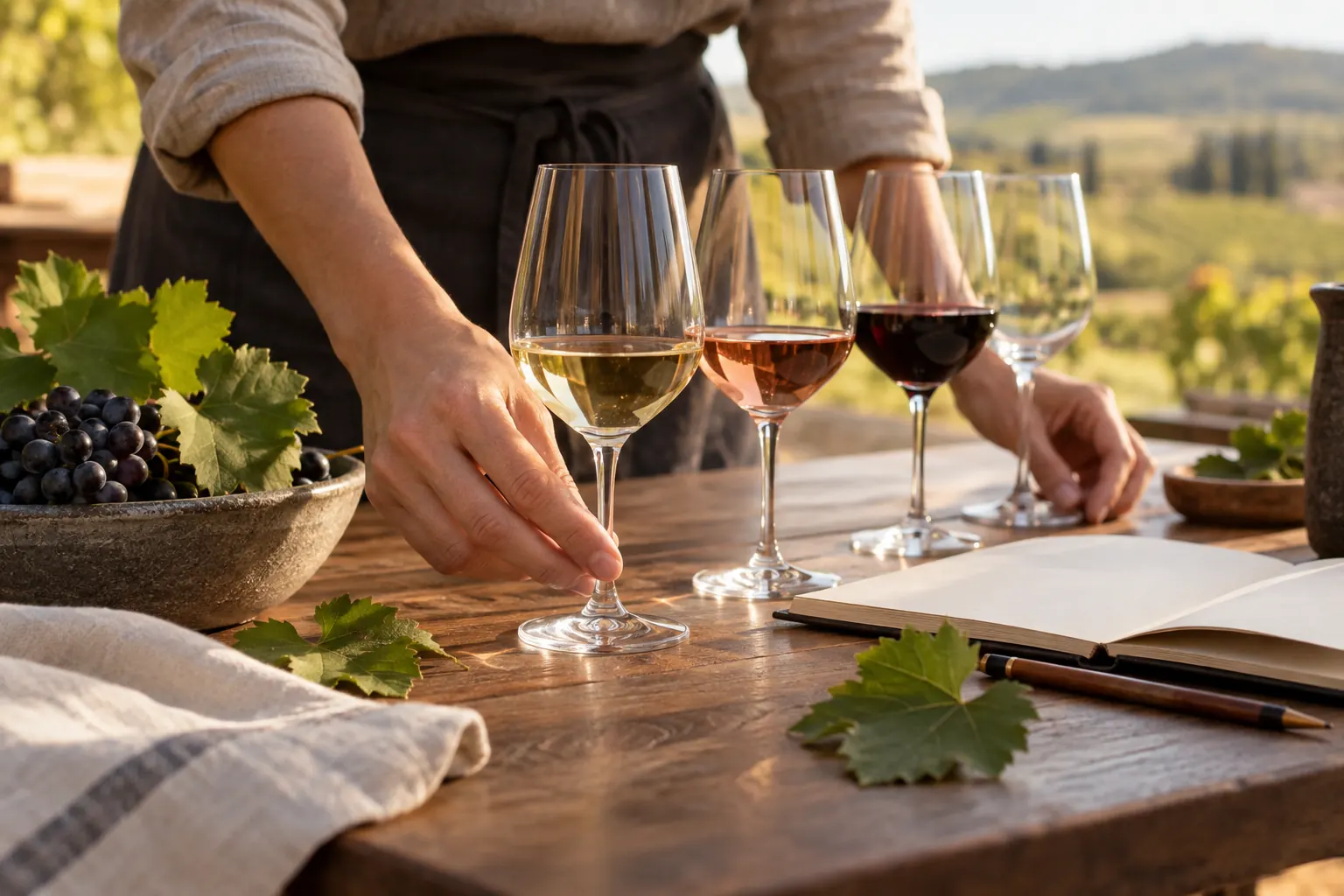
The fresh sensation that makes your mouth water. It can balance a rich wine and help it pair with fatty food.
Learn more ↗Compounds that create a drying or gripping feeling on the gums, especially in reds. Their intensity and texture vary.
Learn more ↗The sense of weight and volume of wine in the mouth. Light, medium and full describe style, not quality.
Learn more ↗The year the grapes were harvested, as shown on the bottle. It gives context, while producer and storage also matter.
Learn more ↗A vine variety grown for its grapes. The same variety can make different wines depending on place and winemaking choices.
Learn more ↗The conditions of a place, including climate, terrain and soil, interacting with human practices. It means more than soil alone.
Learn more ↗A designation tied to a geographic origin and production rules. The exact rules differ by country and appellation.
Learn more ↗A combination of wines or grape varieties to create a particular style. Its composition depends on the wine and producer.
Learn more ↗The period and conditions between fermentation and bottling. Vessel and duration can influence the final style.
Learn more ↗A wine in which sweetness is not dominant. A dry wine can still taste fruity: fruit flavour and sugar are different.
Learn more ↗Wine containing carbon dioxide that forms bubbles when opened and poured. Production methods and styles vary.
Learn more ↗Pouring wine into a decanter. It may aerate the wine or separate sediment; fragile wines call for care.
Learn more ↗